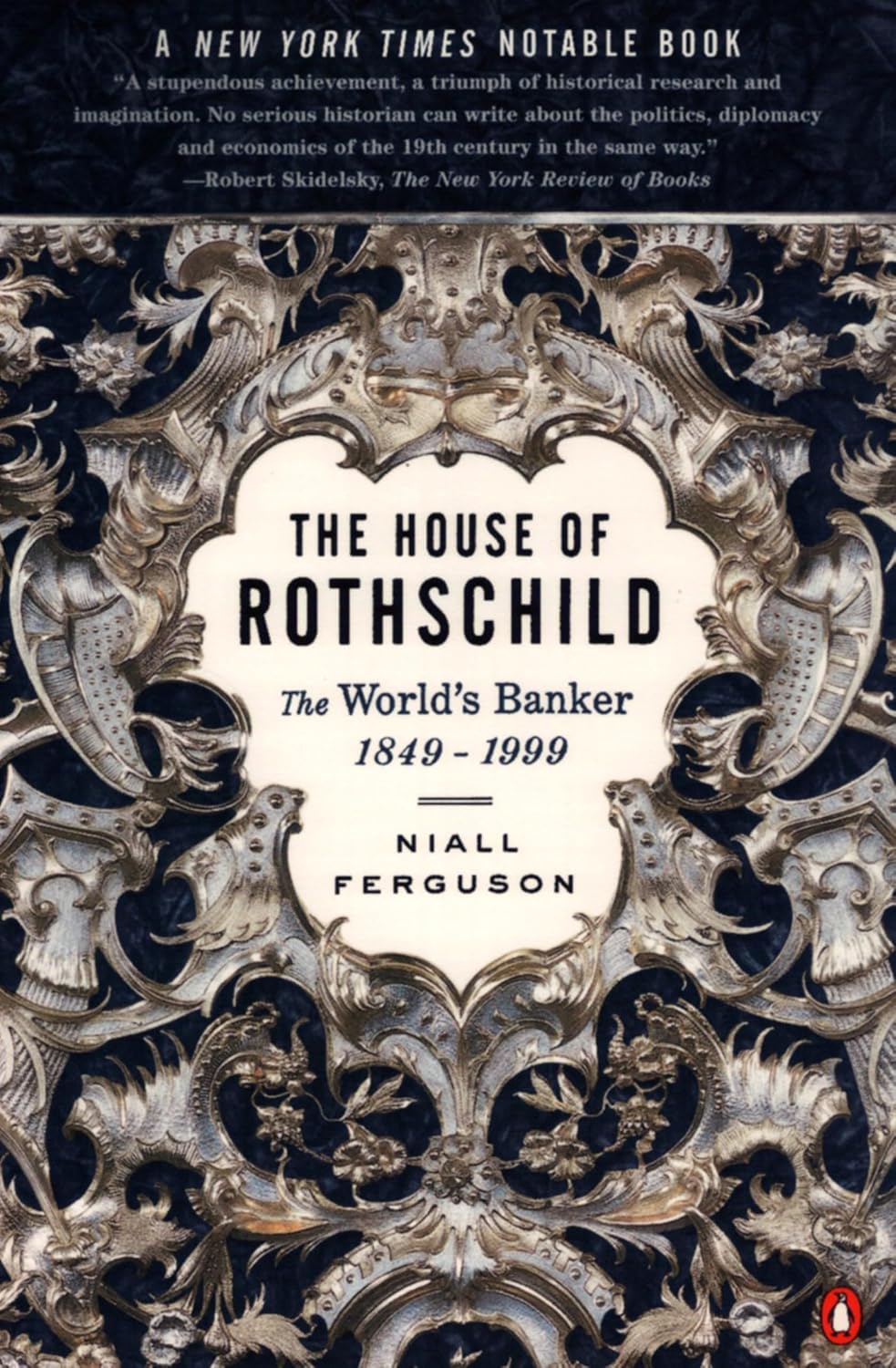
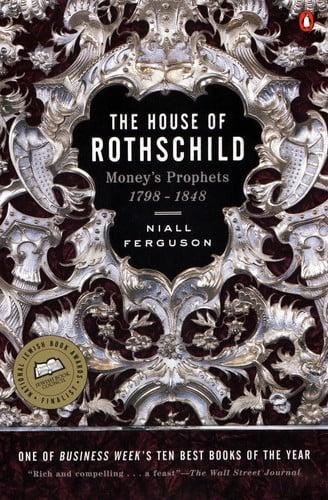
Niall Ferguson’s history of the Rothschilds — how a banking family became a force in European finance and politics.
What this book is about
The House of Rothschild follows the family from the Frankfurt ghetto through the nineteenth century, when brothers in London, Paris, Frankfurt, Vienna, and Naples built a network that financed governments, wars, and industry. Ferguson uses family papers to show how information, credit, and reputation moved faster than armies.
Our take
This is a long, serious financial history — not a scandal book. It rewards readers who want to see how modern banking, government debt, and cross-border capital actually formed. Dense in places; worth it if you care about money as power, not as a motivational slogan.
Who should read this
- Readers of financial and economic history
- Investors who want context on how banking families actually worked
- Students of nineteenth-century Europe
- Anyone pairing this with Ferguson’s earlier Rothschild volume on 1798–1848
About the author
Niall Ferguson is a historian of finance, empire, and money. He has taught at Harvard, Stanford, and the London School of Economics, and writes narrative history grounded in archives rather than anecdote.